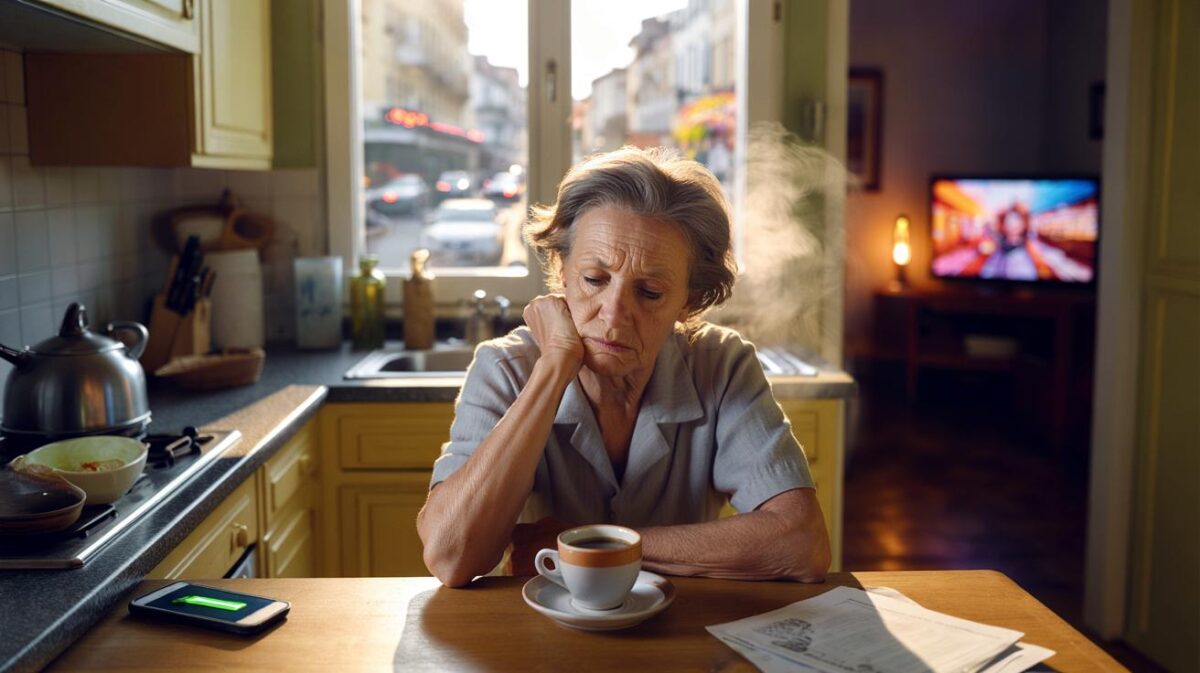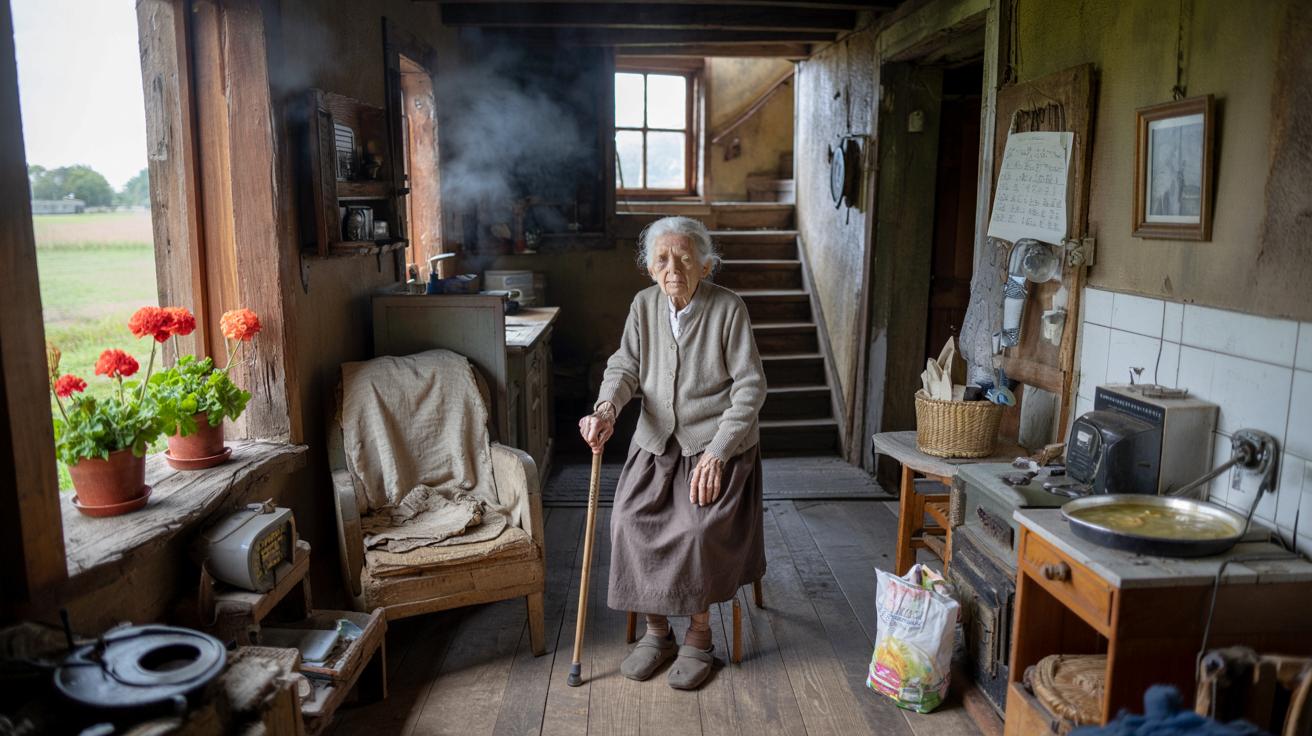
The old farmhouse stands a little crooked, as if it’s stretching after a long nap. On the window ledge, three geraniums fight bravely against the Dutch wind. Inside, an 94‑year‑old woman is stirring her soup. No alarm cords, no staff shuffling by with trolleys, no laminated “day program” on the wall. Just a radio mumbling, a ticking clock, and the stubborn decision: “Ik ga hier niet weg.”
Her children have begged her to “think about later”. Friends have quietly moved to care homes with coffee corners and bingo nights. She visits sometimes, smiles politely, then goes home to her creaking stairs and cold tiles.
She would rather risk falling in her own hallway than sit safely in a chair she never chose.
And she’s not the only one.
De stille keuze voor autonomie boven zorgcomfort
Across the country, there is a hidden group of people in their late eighties, nineties, even over a hundred, who never cross the threshold of a zorginstelling. They stay in the same house where they raised children, built careers, mourned losses, and cooked Christmas dinners.
From the outside, it can look reckless. Why refuse accessible showers, call buttons, and 24/7 staff? Yet when you talk to them, a different picture appears. They are not just resisting a care home.
They are defending a way of being.
Take Jan, 97, living alone on the third floor of a flat without a lift. His GP has lost count of the number of “urgent talks” about relocation. The fire brigade once carried him down as a “practice exercise” after he twisted his ankle. Everyone expected that to be the turning point.
He thanked them kindly, signed the papers for home physiotherapy, and stayed. His argument is disarmingly simple. “Hier ken ik elke tegel. In een tehuis ken ik niks.”
For him, walking more slowly along a familiar corridor beats rolling quickly through an anonymous one. And yes, his risk of falling is real. But so is his sense of self when he shuffles to his own kettle in the morning.
➡️ Harvard-hersenonderzoeker raadt zes dagelijkse gewoontes aan om veroudering te vertragen
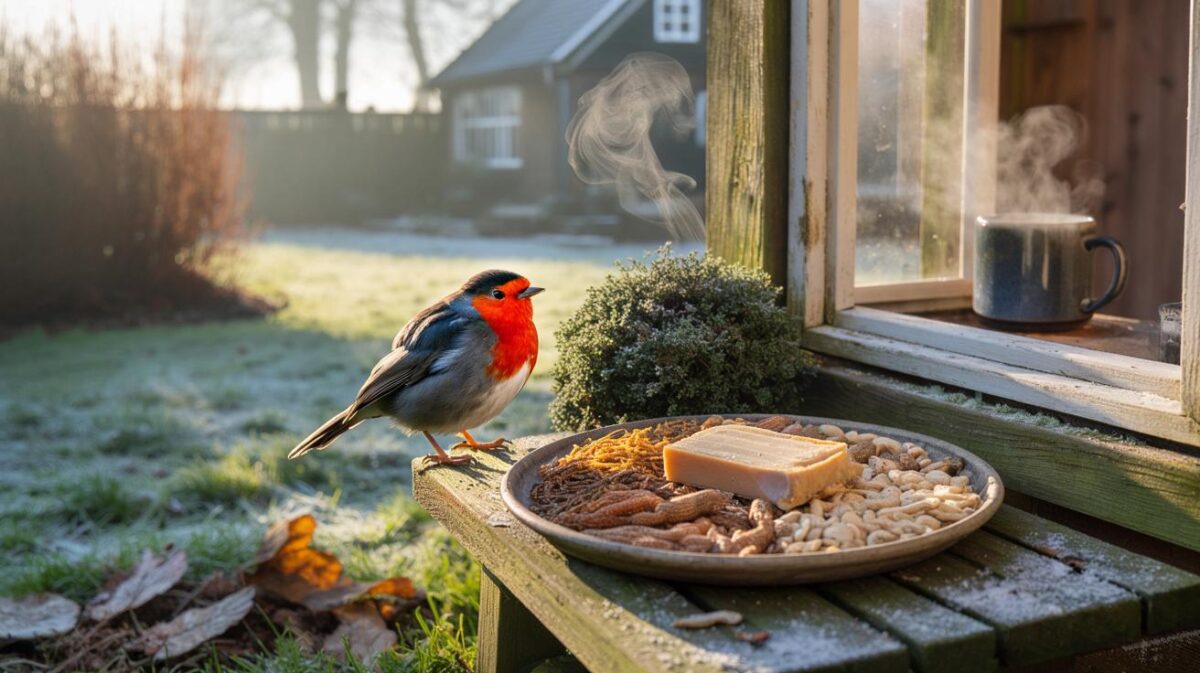
➡️ Koude roodborstjes in de tuin: zet dit vandaag neer en ze komen elke ochtend trouw terug
➡️ Mensen die zich makkelijk dingen herinneren gebruiken bijna altijd deze techniek
➡️ Mensen die vaak aan het verleden denken hebben volgens studies één belangrijk voordeel
What looks like stubbornness is often a razor-sharp calculation. People who grow very old at home know they trade comfort for something less visible but deeply felt. Their own keys. Their own smells. Their own silence.
Researchers talk about “perceived control” as a protective factor for longevity. These elders never read those studies, yet they live them every day. *They instinctively protect the one resource that keeps old age from turning into a waiting room: mental freedom.*
And that choice, quiet and sometimes controversial, reshapes what we think care is for.
Hoe ze het praktisch volhouden: kleine strategieën, grote effecten
If you listen closely, people who grow very old at home share a similar pattern. They rarely describe themselves as “zorgmijder”. They talk about organizing life on their own terms.
They shrink their world without shrinking their dignity. A bedroom moves downstairs. Heavy pans disappear, replaced by lighter ones. A neighbour gets a spare key. “Mantelzorg” doesn’t look like a big project plan. It looks like a niece who does the online shopping, a neighbour who changes a lightbulb, and a district nurse who drops by twice a week while still calling the client “mevrouw” instead of “schatje”.
Little adjustments, fiercely guarded boundaries.
The biggest misunderstanding is that these people pretend they don’t need help. What they resist is being absorbed into a system. There’s a difference.
Many accept a cleaner, meals-on-wheels, even personal care at home. Yet they’ll say no to moving, again and again, even when everyone around them is exhausted by the conversation. We’ve all been there, that moment when an older parent pushes away a glossy brochure of a “zorgresidentie” as if it burns their fingers.
Let’s be honest: nobody really dreams of spending the last years of life in a place named after a flower and a river. The fantasy is always the same: falling asleep in your own bed one evening and simply not waking up.
“Ze zeggen altijd: ‘In het tehuis is alles geregeld.’ Maar hier regel ík alles. En zolang ik dat nog kan, hoor ik niet in een tehuis,” said a 92‑year‑old man from Brabant. His hallway was too narrow for a rollator, but his voice filled the entire house.
- Ze bepalen hun eigen ritme
Waking up when the body wants, not when breakfast is served. Eating stamppot at 22:00 if sleep won’t come. - Ze houden vast aan kleine rituelen
The same coffee mug, the same radio show, the same walk to the same bench. These micro-routines act like anchors when the body starts drifting. - Ze durven selectief afhankelijk te zijn
Help with the shower? Fine. Someone deciding when they go outside? No. This split is not logical on paper, but it is entirely logical emotionally.
Wat deze ‘thuisblijvers’ ons leren over ouder worden
People who become exceptionally old without moving into care facilities force us to ask uncomfortable questions. Maybe safety isn’t the highest form of care. Maybe comfort isn’t either.
There is something almost radical in choosing risk, drafts, and narrow staircases over a professionally managed environment. It sounds romantic until you smell the unwatered plants, see the worn-out carpet, and notice the long walk to the only supermarket left in the neighbourhood. Yet, for many, that trade-off still makes sense.
They live in houses full of echoes, but also full of memories that no architect can rebuild on a care campus.
| Key point | Detail | Value for the reader |
|---|---|---|
| Autonomy as core motivation | Very old people who stay at home consciously accept more risk to keep control over daily life, routines, and space. | Helps you understand older relatives’ resistance and approach conversations with less frustration and more respect. |
| Small adaptations, big impact | Practical tweaks (downstairs bedroom, informal help, selective home care) allow old age at home to remain just manageable. | Offers concrete ideas if you, or someone close to you, wants to grow old without moving to an institution. |
| Mental freedom over comfort | The feeling of “this is my house, my rules” can weigh more than guaranteed comfort and 24/7 care. | Invites you to define what kind of old age you want instead of letting the system decide by default. |
FAQ:
- Question 1Why do some very old people refuse a care home even when it seems unsafe?
- Question 2How can families support an elderly parent who insists on staying at home?
- Question 3Is staying at home always a realistic option at extreme old age?
- Question 4What kind of professional help exists for people who want to grow very old at home?
- Question 5How do you talk about this topic without ending up in the same fight every time?