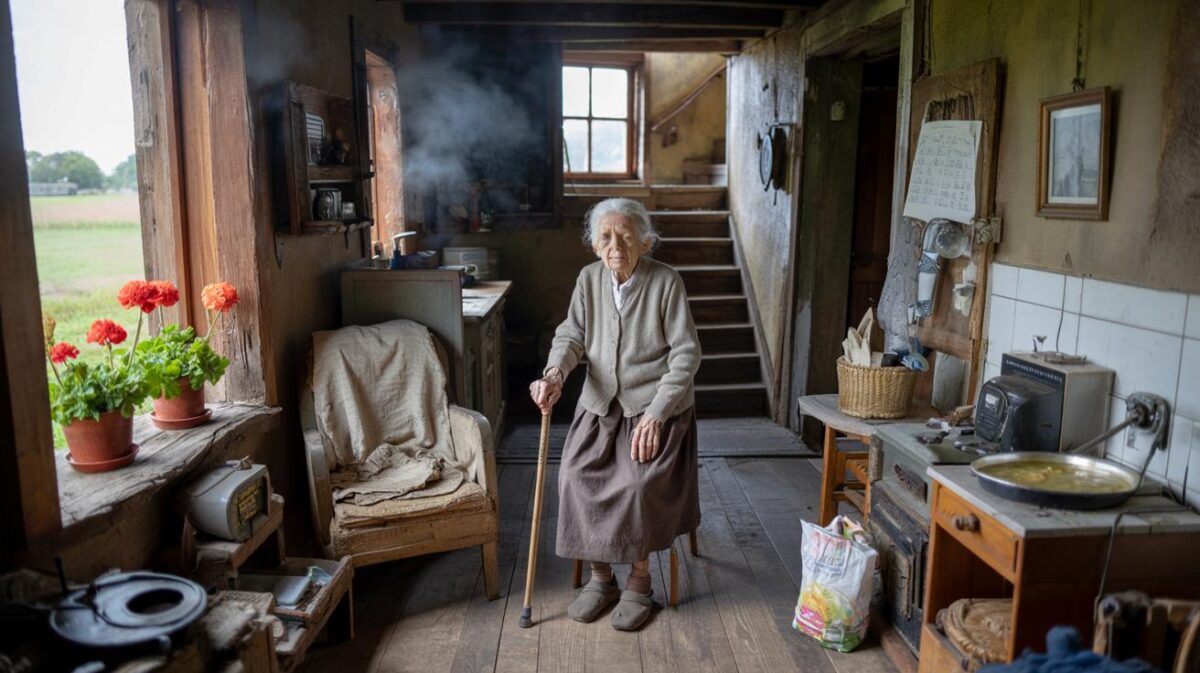
The train was packed, but she barely noticed. Earbuds in, forehead against the window, she wasn’t in 2024 anymore. She was back in her grandmother’s kitchen, the yellow tiles, the smell of burnt sugar, the afternoon light slanting through lace curtains. One tiny memory, triggered by a random perfume on a stranger’s scarf. Her eyes filled up, then she smiled. Two minutes later, she was answering Slack messages as if nothing had happened.
We do this all the time. We rewind, replay, re-edit old scenes in our heads while chopping vegetables or walking the dog.
Most of us secretly worry that this habit means we’re stuck, nostalgic, or “too sensitive”.
But science is starting to say something quite different.
People who look back aren’t always stuck — they’re often sharper
Psychologists have a dry term for this very human habit: mental time travel. You think you’re simply spacing out, drifting to that breakup in 2015 or that incredible road trip with friends. Under the surface, your brain is running a complex simulation.
Several studies suggest that people who frequently revisit their past are not just dreamers. They often have a stronger sense of identity, better decision-making skills, and a surprising advantage in one key area: **they learn from life faster**.
The mind doesn’t just store memories like photos in a cloud. It reshapes them each time you look. That’s where the hidden benefit lies.
Take what researchers call “reminiscence”. In one large study among adults and older people, those who often thought back on their lives with a reflective tone performed better on problem-solving tasks. They weren’t just recalling what happened. They were quietly asking themselves, “What does this say about me? What did I do right, or wrong?”
Another experiment with students found that writing about a difficult past event before an exam reduced their anxiety and improved performance. The ones who engaged deeply with their past stress didn’t crumble under pressure as easily.
On paper, it looks like a statistic. In reality, it’s that moment at 2 a.m. when your brain replays a painful conversation until, finally, something clicks.
➡️ Mensen die zich makkelijk dingen herinneren gebruiken bijna altijd deze techniek
➡️ Harvard-hersenonderzoeker raadt zes dagelijkse gewoontes aan om veroudering te vertragen
➡️ Koude roodborstjes in de tuin: zet dit vandaag neer en ze komen elke ochtend trouw terug
The key advantage that keeps coming back in study after study is this: **people who often think about the past tend to have stronger emotional resilience**.
By revisiting old episodes, they build a kind of inner “manual”: what hurt, what healed, what mattered. They train their nervous system to recognize, “I’ve survived something like this before.”
This doesn’t mean endlessly ruminating on regrets. The benefit appears when your look at the past has a gentle, curious tone rather than a punishing one. In that case, memory becomes less of a ghost and more of a guide.
How to think about the past without drowning in it
There’s a small, concrete gesture that changes everything: give your memories a narrator.
Next time your brain throws up an old scene — the job you lost, the crush you never confessed to, that awkward family dinner — try telling it in the third person, almost like a short story. “She arrived late and felt everyone’s eyes on her. He said yes to a job he already knew wasn’t right.”
This tiny shift, tested in several psychological studies, creates distance. You’re not trapped inside the memory anymore. You’re watching it. And from there, your brain can do what it does best: connect dots, extract lessons, and quietly update your inner map of the world.
The trap many of us fall into is confusing reflection with self-attack. You know that mental loop: “Why did I say that?” “How could I be so stupid?” “I always ruin everything.” That’s not memory, that’s a trial.
If you recognize yourself here, you’re far from alone. We’ve all been there, that moment when a tiny flashback suddenly opens a door to three hours of spiraling thoughts.
What the science suggests is simple but not always easy: shift from “What’s wrong with me?” to “What was I trying to do back then?” That small question brings compassion into the room. And compassion changes the story you tell about your own past.
One researcher put it like this: “People who revisit their past with kindness don’t get stuck there. They build a bridge between who they were and who they’re becoming.”
- Look back on purpose, not just by accident.
- Describe the scene as if you’re a gentle journalist, not a judge.
- Ask one question: “What did this version of me need that they didn’t have?”
- Notice one thing you did well, even if it was tiny.
- Allow the memory to be incomplete, a draft — not a final verdict.
The quiet superpower hidden in your memories
Once you see your past as raw material instead of a closed chapter, something loosens. The same scenes that once made you cringe start to offer data: patterns in your choices, early signs of burnout, little intuitions you ignored.
You may realize you’ve been carrying a lesson for years without naming it. Maybe it’s “I’m more creative when I’m not trying to impress anyone”. Maybe it’s “Every time I overwork, my body sends a warning two weeks before I crash.”
*Memory becomes less about nostalgia and more about navigation.*
Let’s be honest: nobody really does this every single day. Most of us remember things randomly, while scrolling or brushing our teeth.
Yet even that messy, imperfect way of revisiting the past can be deeply useful if you change your stance toward it. Instead of pushing away old images when they hurt, you can decide, from time to time, to sit with one. Turn it over in your mind like a seashell. Spend two minutes asking, “What did this moment try to teach me?”
That’s where the advantage of “past-thinkers” quietly shows up. They don’t just remember. They mine.
When you talk to people who often drift into yesterday, they’ll rarely call it a strength. They’ll say things like “I overthink everything” or “I live in the past too much.” Yet inside that tendency sits a real gift: the ability to connect your present choices to a long, rich line of experiences.
Over time, that builds a deeper sense of continuity. You’re not just reacting to today. You’re answering a story that started long before this week’s crisis or this year’s goal.
And that story, with its awkward scenes and shining moments, is yours to edit, understand, and share.
| Key point | Detail | Value for the reader |
|---|---|---|
| Reflective memory builds resilience | Studies link frequent, gentle reflection on past events to better coping skills and emotional stability | Helps you feel less “broken” for thinking about the past and more equipped for future challenges |
| Third-person storytelling creates distance | Retelling memories as if narrating someone else’s story reduces emotional overload | Lets you learn from painful moments without being swallowed by them |
| Curiosity beats self-criticism | Shifting from “What’s wrong with me?” to “What was I trying to do?” changes the emotional tone | Turns old regrets into useful information instead of endless self-blame |
FAQ:
- Is thinking a lot about the past always unhealthy?Not necessarily. Research suggests it becomes unhealthy mainly when it’s harshly self-critical or obsessive. Gentle, curious reflection can actually support mental health.
- What’s the one big advantage of people who often think about the past?They tend to extract more lessons from their experiences, which boosts resilience and helps them make wiser decisions in the present.
- How do I stop my memories from turning into spirals?Try narrating the scene in the third person and limiting your reflection to a few minutes. Focus on “What did I learn?” instead of “Why am I like this?”
- Isn’t it better to just live in the moment?Living in the moment matters, but humans naturally move between past, present, and future. Balanced mental time travel — not total “now-only” focus — supports better planning and self-understanding.
- Can I practice this if my past includes trauma?Yes, but gently. For intense or traumatic memories, it’s wise to work with a therapist so you’re not facing them alone while you build this reflective skill.